
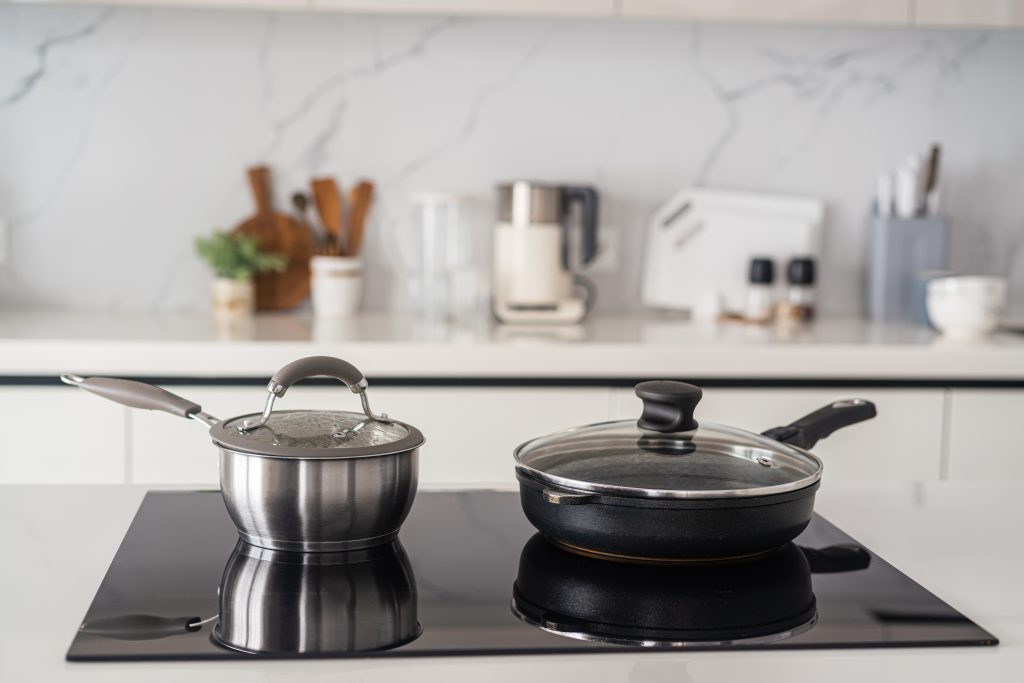
If your cooktop buzzing sound only shows up with certain pots, it can feel confusing and a little worrying. However, this is often linked to how the cookware material and the cooktop heating system interact. At Jay Appliance Repair, we help Fort Saskatchewan homeowners sort out what is normal and what needs repair, so cooking stays safe and predictable.
Why a cooktop buzzing sound happens on specific cookware
A buzzing noise that changes when you switch pots usually points to cookware compatibility, heat transfer, or vibration. Therefore, the first step is to figure out what type of cooktop you have and what kind of pot is causing the sound. Some noises are expected on induction units, while others can hint at loose parts, a worn fan, or an electrical issue that should be checked.
Induction cooktops and “magnetic vibration”
Induction cooktops heat the pan by creating a magnetic field that energizes the metal. Consequently, some cookware can vibrate slightly as the magnetic field cycles, and the result is a buzzing or humming sound. This is more common with thinner-bottom pans, multi-layer pans with uneven bonding, or cookware that is slightly warped. That is to say, the cooktop may be working correctly, but the pot is reacting to the energy in a noisy way.
Electric radiant cooktops and tiny movement
On radiant electric glass tops, buzzing is less “normal,” but it can still happen. For instance, a pan with an uneven bottom can rock on the glass, and the vibration can sound like buzzing when the element cycles on and off. In addition, some cooktops have internal relays that click or hum lightly during temperature control, although a loud buzz is not typical.
Quick checks you can do safely before booking service
Small tests can help you narrow the cause without taking anything apart. Most importantly, stay focused on safe steps only, and avoid opening panels or touching wiring.
Try a different pot of the same size
Swap to a heavier, flat-bottom pot and place it centered on the burner zone. Meanwhile, listen for whether the sound drops or disappears. If the noise only happens with lightweight pans, it often points to cookware vibration rather than a cooktop fault.
Check the bottom of the pan
Look for warping, dents, or rough rings on the base. After that, wipe the bottom clean and dry, because tiny debris can make a pan vibrate or chatter on glass. Similarly, check the cooktop surface for crumbs or grit that could create noise when the pan settles.
Use a lower power setting
Induction cooktops can buzz more at high power. Therefore, test the same pot at medium heat for a minute or two. If the buzzing is loud only at high power and fades at medium, cookware vibration is a strong possibility.
If you want a local team to confirm what you are hearing, Jay Appliance Repair can inspect the unit through our cooktop repair Fort Saskatchewan service page.
When the sound is normal vs when it signals a problem
Some sounds are expected, but others should not be ignored. In other words, the key is consistency, loudness, and whether the noise appears with every pot.
Sounds that are often normal
Induction hum or buzz that changes with pot type is common. For example, switching from a thin pan to a heavy pan often reduces the noise right away. A quiet fan sound on some models is also typical, especially after cooking when the cooktop is cooling down.
Sounds that are not normal
A loud buzz that happens on every burner, a burning smell, visible sparking, or power cycling is not normal. Consequently, the cooktop should be turned off and checked. If the cooktop buzzes even with no pot on the surface, that can suggest an internal component issue, such as a loose connection, a failing control board, or a damaged filter circuit.
For broader appliance help in the area, you can also visit our main site at appliance repair Fort Saskatchewan.
What our technician looks for during diagnosis
When Jay Appliance Repair visits, the goal is to separate cookware behavior from a cooktop issue. Therefore, we test the cooktop with known compatible cookware, confirm stable power delivery, and check how the sound changes across power levels. We also look for signs of heat stress, loose mounting hardware, and fan operation on induction models.
Electrical supply and grounding checks
A poor connection, weak grounding, or a damaged terminal can increase noise and cause unstable heating. That is to say, the cooktop may sound “busy” because it is not receiving clean power. In addition, a technician can confirm whether the issue is inside the cooktop or coming from the home’s electrical supply.
Cooling fan and internal components
Many induction units use fans, and a worn bearing can create a buzz that is easy to mistake for cookware vibration. Moreover, loose brackets or panels can resonate at certain frequencies and only become noticeable with certain pots and power settings.
If your cooktop is part of a matching set, we can also help with other appliances like oven repair Fort Saskatchewan and washer repair Fort Saskatchewan when needed.
How to reduce buzzing with the right cookware choices
Choosing cookware that matches your cooktop can make cooking quieter. Above all, look for flat-bottom, heavier pans with a solid base. For induction, ensure the cookware is magnetic and built for induction use. Likewise, avoid lightweight, very thin pans that can flex and vibrate.
If you use a brand-specific setup and want guidance on compatible options, our LG appliance repair in Fort Saskatchewan page can be helpful for households running LG cooking equipment alongside other LG appliances.
FAQs
Why does my cooktop only buzz with one specific pot?
Usually the pot base is thin, slightly warped, or built with layers that vibrate under heat. Therefore, the cooktop can be fine while that single pot reacts noisily.
Is a buzzing sound dangerous on an induction cooktop?
A mild hum can be normal, but a loud buzz with smells, sparks, or error codes is not. Consequently, stop using the unit and schedule service if the sound seems abnormal.
Why does the buzzing get louder on high power?
Higher power increases the energy and the chance of vibration in the cookware. In other words, the pot may resonate more strongly at certain heat settings.
Can a cooktop buzz even when no pot is on it?
It should not buzz loudly with no cookware. Therefore, that can point to a fan issue, loose internal parts, or an electrical component that needs diagnosis.
What cookware works best to prevent buzzing?
Heavier, flat-bottom cookware with a solid base helps. Moreover, induction-ready pans with a thick, even bottom usually reduce vibration and noise.