
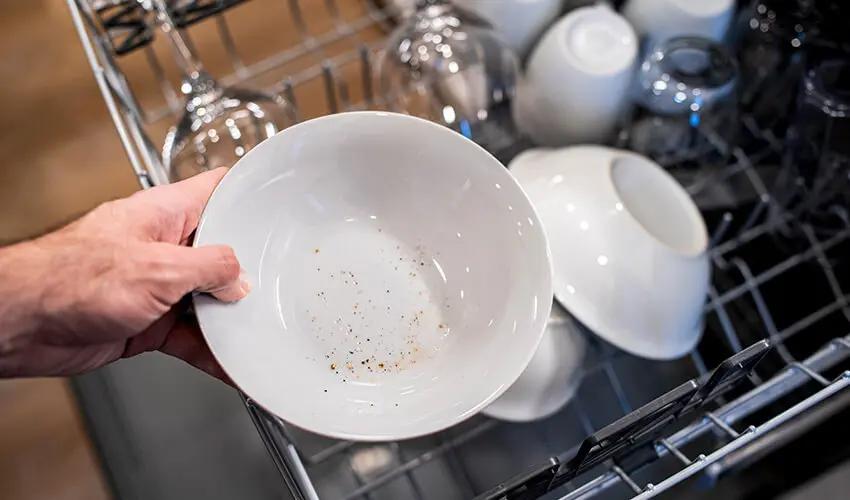
Jay Appliance Repair gets this question often: your dishwasher runs a full cycle, the door feels warm, steam pours out — yet the dishes come out greasy, spotted, or still dirty. This is a frustrating problem, and it has real causes you can diagnose. Understanding why your dishwasher feels hot but dishes stay dirty helps you decide whether to adjust a setting, clean a component, or call a technician.
Why Heat Alone Does Not Mean Clean
Many homeowners assume a hot dishwasher means a working dishwasher. Heat is only one part of the cleaning equation. Water temperature, water pressure, detergent quality, spray arm function, and drain performance all play a role. When any one of these breaks down, dishes come out dirty — even if the machine feels hot to the touch.
The heating element in most dishwashers sits at the bottom of the tub. It heats the water and helps dry the dishes at the end of the cycle. If this element works but other parts fail, you get warmth without cleanliness. Heat is a symptom of the machine running, not proof that it is cleaning correctly.
Clogged Spray Arms Are a Common Culprit
Spray arms distribute hot water across your dishes during the wash cycle. Over time, food particles, mineral deposits, and grease clog the small holes in these arms. When the holes are blocked, water pressure drops. The arms may still spin, but they stop delivering the strong jets needed to break down food residue.
Remove your spray arms and hold them up to the light. If you cannot see through the holes clearly, they need cleaning. Use a toothpick or thin wire to clear each hole, then rinse the arm under warm water before reinstalling. This simple fix solves dirty dishes in many cases without any professional help.
Low Water Temperature at the Source
A dishwasher repair technician will often check your home’s hot water supply before touching the machine itself. If your water heater is set below 49°C (120°F), the water entering the dishwasher is not hot enough to dissolve grease or activate dishwasher detergent properly. The dishwasher heats the water further once it enters, but starting cold means it may never reach the right temperature within the cycle time.
Run your kitchen tap for 30 seconds before starting the dishwasher. This flushes cold water from the pipes and delivers hot water to the machine from the first moment. Check your hot water heater settings too. Raising the temperature slightly can improve cleaning performance across your whole home.
Using the Wrong Detergent or the Wrong Amount
Detergent matters more than most people realize. Old detergent, low-quality pods, or the wrong product for your water hardness all reduce cleaning power. Hard water — common in many parts of Alberta — reacts poorly with standard detergents and leaves a white film on glassware and dishes.
Switch to a detergent designed for hard water, or add a rinse aid to your routine. Rinse aid breaks the surface tension of water, helping it sheet off dishes instead of pooling and leaving spots. If you are using too much detergent, it can leave a soapy film that looks like dirt. Follow the manufacturer’s dosage guide for your specific water hardness level.
A Failing Wash Pump or Motor
The wash pump pushes water through the spray arms with enough force to clean dishes. When this pump weakens or fails, water pressure drops across the entire system. Your dishwasher still heats up and completes a cycle, but the water never moves with enough force to scrub away food residue.
Signs of a failing pump include unusual humming sounds, weak spray arm pressure, and standing water in the bottom of the tub after a cycle. This repair requires a professional. A certified technician can test the pump motor, identify whether it needs cleaning or replacement, and restore full pressure to the system.
Blocked or Dirty Filters
Modern dishwashers have a filter at the base of the tub that catches food debris. Unlike older models with self-cleaning filters, newer units require you to remove and clean this filter manually. A clogged filter restricts water circulation and allows dirty water to recirculate over your dishes during the rinse cycle.
Remove the filter, rinse it under warm running water, and use a soft brush to clear trapped particles. Do this once a month for best results. Neglecting this step is one of the most common causes of dishes that feel hot but come out dirty and smelling stale.
When the Door Seal or Water Inlet Fails
A damaged door gasket can allow heat to escape during the cycle. More importantly, a faulty water inlet valve may restrict how much water enters the tub at the start of the cycle. Low water volume means the spray arms cannot build sufficient pressure even if the pump works perfectly.
If you notice your dishwasher seems unusually quiet during the fill stage, or if the tub looks low on water when you pause mid-cycle, the inlet valve may need inspection. This is a job for a stove repair and appliance specialist familiar with water inlet systems across kitchen appliances.
Loading Habits That Block Water Flow
Before calling anyone, review how you load the machine. Overloading blocks spray arm rotation. Large pots placed face-up collect water instead of letting it drain. Glasses placed at an angle trap water and come out spotted. Nesting utensils in the cutlery basket prevents water from reaching their surfaces.
Load dishes so that all surfaces face the center of the machine where the spray arms direct their jets. Place bowls and pots face-down and angled so water runs off. Space items apart so water can circulate freely between them. Proper loading alone can transform cleaning results without any repairs at all.
When to Call a Professional
If you have cleaned the filter, checked spray arm holes, confirmed water temperature, and adjusted your detergent — and dishes are still dirty — it is time to bring in a technician. Internal components like the wash pump, control board, heating element thermostat, and water inlet valve all require proper diagnosis and tools to repair safely.
Jay Appliance Repair serves homeowners dealing with exactly these problems. Attempting to disassemble a pump or test electrical components without training risks further damage and potential safety hazards. A qualified technician identifies the root cause quickly and restores your machine to full performance.
For homeowners dealing with multiple appliance concerns, it helps to work with a team experienced in appliance repair Fort Saskatchewan services across all major kitchen and laundry equipment.
Preventing the Problem from Returning
Maintenance prevents most performance issues before they develop. Run a dishwasher cleaning cycle once a month using a commercial descaler or a cup of white vinegar placed in the bottom rack. Clean your filter monthly. Check spray arm holes every few months. Use rinse aid consistently, especially in areas with hard water.
If your home relies on a well or older plumbing, consider having your water tested for hardness. Installing a whole-home water softener reduces scale buildup across all your appliances, including your freezer repair needs and other units that depend on clean water supply lines.
Jay Appliance Repair recommends scheduling a professional appliance inspection once a year. A technician can catch small issues — worn seals, weak pump pressure, early heating element failure — before they become expensive breakdowns. Prevention is always cheaper than emergency repair.
Understanding what causes a dishwasher to feel hot but leave dishes dirty puts you in control. Most causes are fixable, many without professional help. When the problem goes beyond basic maintenance, Jay Appliance Repair is ready to diagnose and solve it fast. Do not let a dishwasher problem linger — dirty dishes, wasted detergent, and wasted water add up quickly over time.
FAQ
Q1: Why does my dishwasher feel hot but still leave food on the dishes? Heat means the heating element is working, but cleaning requires proper water pressure, spray arm function, and detergent performance. Any one of these can fail while the machine still heats normally.
Q2: How often should I clean my dishwasher filter? Clean it at least once a month. In households with heavy daily use or hard water, every two to three weeks is better. A clogged filter is one of the most common causes of poor cleaning results.
Q3: Can I fix a clogged spray arm myself? Yes. Remove the spray arm, clear blocked holes with a toothpick or thin wire, and rinse thoroughly before reinstalling. This is a safe DIY task that requires no tools or technical knowledge.
Q4: What temperature should my water heater be set to for the best dishwasher performance? Set your water heater to at least 49°C (120°F). Temperatures below this reduce detergent effectiveness and prevent the dishwasher from reaching the heat needed to sanitize dishes properly.
Q5: When should I stop troubleshooting and call a repair technician? If basic maintenance — filter cleaning, spray arm clearing, water temperature check, and detergent adjustment — does not resolve the issue, contact a professional. Pump failures, inlet valve problems, and control board issues require trained diagnosis and safe repair.