
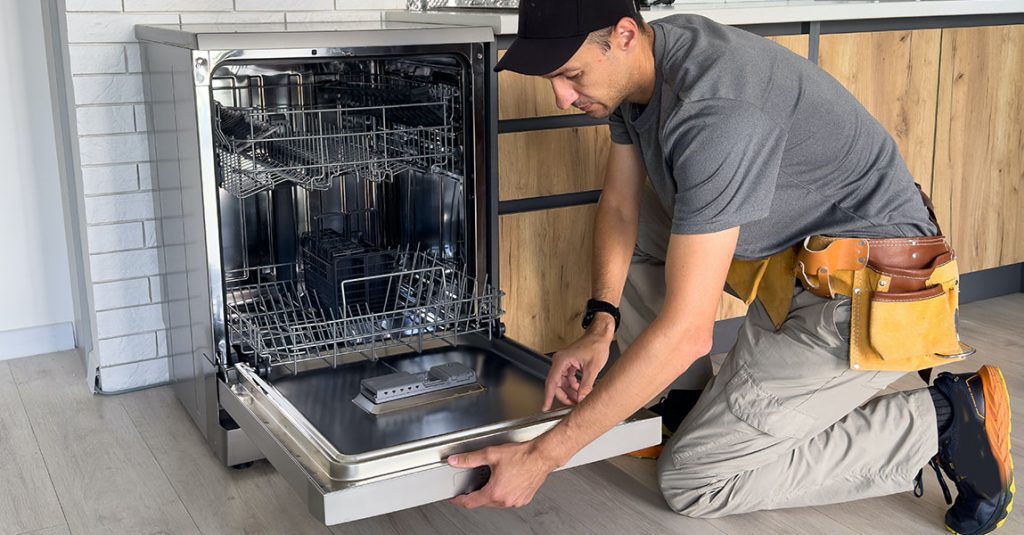
When a dishwasher leaves behind water after the final rinse, something’s not working the way it should. This leftover water can lead to bad smells, spots on clean dishes, and even mold buildup over time. Instead of ignoring it, we look for the reason behind it and work through each part that may be to blame. A few small parts often cause most of the trouble, and the good news is that many issues can be solved before they get worse.
Below, we’ll walk through what to check first, how to approach clogs and filter issues, and what to do if the drain pump or cycle timing isn’t working properly. We’ll also share some tips to prevent it from happening again.
Check for Food Debris in the Filter
Start by removing the bottom rack and looking under the spray arm. There’s a round or rectangular filter where water drains out. Sometimes, food bits get stuck here and stop water from moving through. This filter catches scraps during each wash. However, when too much builds up, water can’t pass through fast enough before the cycle ends.
Lift out the filter and rinse it in the sink. If greasy or sticky, warm soapy water and a soft brush help clean it well. Be sure nothing is left inside the housing below the filter. A few kernels of corn or a soft label can block the flow. In many cases, cleaning this part fixes the draining problem right away.
After cleaning, run a short cycle and check for leftover water. If the issue continues, there may be something deeper causing the drain to slow down after rinsing.
Inspect the Drain Hose for Blockages
Next, we check the drain hose connected to the back of the unit or garbage disposal. This hose carries water out during and after the rinse. If it’s pinched, kinked, or clogged, water won’t escape quickly enough. We shut off power and water, then gently pull the dishwasher out to see the hose clearly.
Look for sharp bends or signs of buildup. A blocked hose often feels stiff or heavier in spots. We disconnect the hose, place one end in a bucket, and blow through it or flush it with warm water. A turkey baster or wet vacuum can help clear it safely without damage.
Once it’s cleaned out and reattached, we re-run the drain cycle to test it. This step solves many issues linked to partial draining, especially after the final rinse when water should flow freely. If problems return quickly, something might be blocking the pump or check valve next.
Make Sure the Drain Pump Works Properly
If water sits at the bottom even after cleaning the filter and hose, the drain pump may not be doing its job. We listen during the last few minutes of a cycle. A working pump hums or clicks as it pushes water out. If there’s silence or a weak noise, the motor could be worn or blocked.
To inspect, we disconnect the dishwasher and access the pump under the unit. We remove it carefully and look inside for broken glass, paper, or seeds. These items stop the impeller from spinning properly. We also check the motor wiring for corrosion or loose connections.
Sometimes, the pump fails slowly. It may work during the wash but struggle with heavier draining at the end. Replacing the drain pump fixes this for good in most cases. But before doing that, we confirm power is reaching it and that no simple part like a stuck valve is the real problem.
Examine the Check Valve and Air Gap
After water leaves the dishwasher, it travels past a check valve or through an air gap at the sink. These parts stop dirty water from flowing back in. If the valve is stuck closed or if food clogs the air gap, water won’t drain out fully.
We begin by checking for an air gap next to the faucet. If it’s clogged, it overflows or makes gurgling sounds. We remove the cap and clear any buildup with a stiff brush. If there’s no air gap, we find the check valve on the drain hose near the pump. It should move freely in one direction. If stuck or broken, it blocks water during the final rinse.
Cleaning or replacing the valve takes only a few minutes but can make a big difference. A blocked return path confuses the system and may trick the dishwasher into ending the cycle before water finishes draining.
Confirm the Final Rinse Cycle Is Completing
Even with everything clean and in working order, water may remain if the rinse cycle ends too early. Dishwashers run on programmed timers, and if something disrupts the cycle, like a faulty control board, temperature sensor, or door switch—the draining step may never happen.
We first test shorter cycles to see if the issue repeats. If they complete fully but normal cycles don’t, the timer or sensor could be malfunctioning. Some models need hot enough water to continue. If the temperature drops during rinsing, the cycle might stop without draining.
Checking the door latch is also important. If it loosens mid-cycle, the dishwasher may cancel steps without a clear warning. We test by gently tugging on the door during a run. If it pauses, the latch might need tightening or replacement.
This type of problem usually calls for help from someone trained in appliance repair in Fort Saskatchewan since electrical parts require care and proper tools.
Avoid Overloading and Incorrect Loading
When dishes block the drain path, even a working system can leave water behind. We see this often when large pots or cutting boards sit at the back, covering the sump or lower spray arms. During the rinse, water flows down and needs a clear route to the drain.
We recommend checking the user manual’s loading guide. Most dishwashers are designed for specific placements. Tall dishes in the wrong spot redirect water or block spray pressure. That extra pressure can then push debris back into the filter.
Overloading can also lead to uneven draining. When dishes press against the door or hang over racks, they disrupt how the final rinse flows and drains. Using the right amount of detergent and avoiding pre-rinsing with grease also helps.
Spacing out dishes evenly not only improves cleaning but also prevents leftover rinse water. That’s an easy habit that saves effort and avoids further trouble.
Test for Electrical Control Failures
Once water flow, pump, and loading are checked, we test for electrical problems. Control boards tell the dishwasher when to fill, spray, heat, and drain. A glitch can skip the last step entirely, especially if connections are loose or shorted by moisture.
We unplug the unit and check wires behind the kickplate. Signs of melting, rust, or black residue point to control failure. Some boards show a small LED status light that blinks codes for faults. We look these up in the manual to narrow the cause.
If replacing parts, we always use the correct match for the model. Wrong boards or mismatched components cause draining errors and other problems. It’s not uncommon to find older dishwashers slowly failing at the control level after years of use.
At this point, most homeowners turn to a local technician for trusted dryer repair Fort Saskatchewan or dishwashing system diagnosis, especially when control panels are involved.
When to Call a Professional for Ongoing Drainage Issues
If the issue returns after trying all these steps, there may be a deeper fault that needs expert attention. Sometimes the dishwasher works during service tests but fails in real cycles. That suggests an intermittent fault in the control board, wiring, or internal sensors.
Also, if water backs up into the sink when the dishwasher runs, the household drainpipe could be slow. That’s not a dishwasher issue but a sign of a partial clog in the kitchen plumbing.
Some machines keep water as a default at the end of eco or quick washes. Reading the manual confirms if a small pool is normal. If not, consistent standing water signals a real problem.
Our team at JAY Appliances helps with every type of appliance concern. You can contact us today to schedule a checkup or get clear advice. We’re happy to explain what’s going wrong and what it will take to fix it the right way.
FAQs
Why does my dishwasher leave a small amount of water after every cycle?
It might be normal in some cycles, especially eco modes. If it’s more than an inch or smells, it’s likely a drain problem.
Can I use baking soda or vinegar to clear a dishwasher drain?
These help with smells but usually don’t fix clogs. If food or grease is stuck, manual cleaning or disassembly works better.
Is it safe to run the dishwasher if there’s water left inside?
Running it again once may help clear it. But if water remains every time, keep it off until the issue is fixed.
What tools do I need to check the drain hose or pump?
You’ll need pliers, a towel, bucket, screwdriver, and gloves. Some models require a nut driver or socket wrench too.
How long does it take to fix a dishwasher that won’t drain?
Simple blockages take under an hour. If electrical parts fail, it may take longer and require part ordering.