
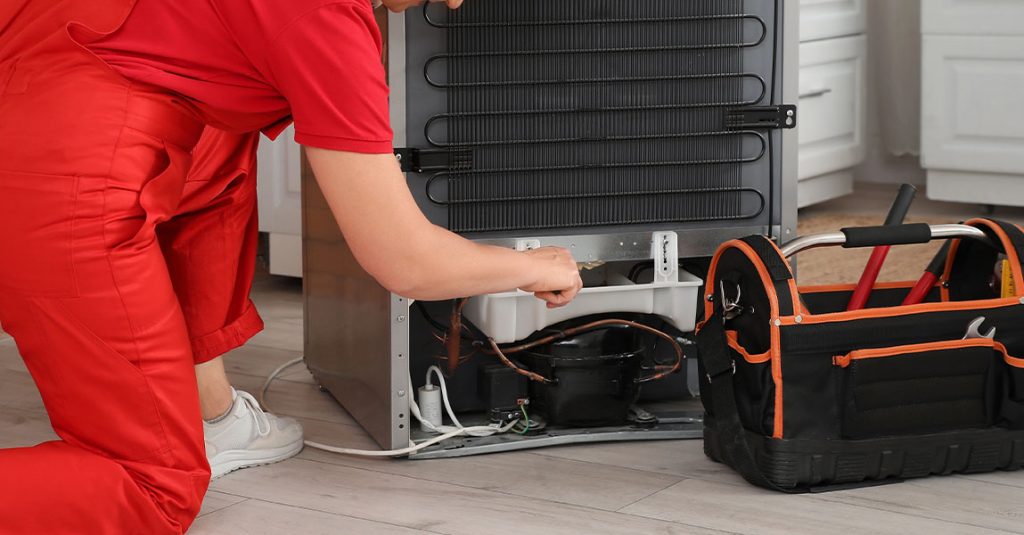
When a freezer builds up ice on the floor panel, it usually means something in the system isn’t draining or sealing properly. That small layer of ice can eventually grow into a thick sheet that makes it harder for the appliance to maintain its temperature. Water should drain away during defrost cycles, but when it doesn’t, it has nowhere to go. Understanding what causes this and how to prevent it makes a big difference. We deal with this issue often during appliance repair in Fort Saskatchewan, and we’ve learned that spotting early signs prevents more serious damage down the line.
Drain Tube Blockage and Ice Buildup
One of the most common reasons for ice forming on the freezer floor is a blocked or clogged defrost drain. Every time the freezer defrosts, water needs to exit through a small drain tube at the back or bottom. If debris, food particles, or even mold blocks the line, water pools inside and freezes. Over time, it adds layer after layer of ice.
We usually check this part first when inspecting freezers that show this symptom. Clearing the drain using warm water or a small pipe cleaner often restores proper flow. However, if the line keeps freezing again, it might indicate insulation damage or poor tube placement. In some models, this drain line exits into a drip pan near the compressor, which should evaporate the water safely. If that pan is already full or the tube is misaligned, the water has nowhere to go.
Cleaning this system twice a year reduces the risk. To do it yourself, unplug the freezer, remove the panel covering the drain, and flush the tube gently. Just be careful not to poke too hard and cause damage. When done regularly, this small task saves you time and helps avoid costly freezer repair in Fort Saskatchewan.
Door Seal Leaks and Humidity Intrusion
Another possible cause is warm air sneaking into the freezer due to a worn or broken door gasket. When the seal isn’t tight, outside air enters and creates condensation. That moisture then freezes on the floor, usually in the front or corners of the unit. We check this by running a flashlight around the seal from the inside. If any light escapes, that’s a clear gap.
Replacing a door gasket is straightforward in most cases. You’ll find the replacement part online or from the manufacturer, and it usually snaps into place without tools. Just make sure the new seal sits flat against the frame with no folds or bulges. Also, avoid overloading the door bins, which can pull the seal out of alignment.
Humidity is another factor. If the room is very damp or if the freezer is opened often, more moist air gets inside. That’s why basement freezers often see this problem more than ones in the kitchen. A small room dehumidifier near the unit helps in these cases. Keeping the door closed firmly and not leaving it open too long also limits frost formation.
Overfilled Freezer and Airflow Disruption
Some people pack their freezers to the top, thinking it saves space or keeps things cold longer. While that can help stabilize temperatures, it can also block the vents and fans that move air around. When cold air can’t circulate properly, certain areas freeze unevenly. The floor panel tends to collect that excess moisture, and that’s where ice builds up.
Freezers are designed with airflow patterns in mind. Vents usually sit on the back wall or the sides and push chilled air from the evaporator fan. If those vents are blocked by large boxes, bags, or meat packages, the air gets trapped and condenses in places it shouldn’t. That’s why we always suggest leaving an inch or two of space around the vents and never storing items directly against the back panel.
If you notice frost forming only in one section, check the airflow paths. Rearranging items often solves the problem without needing a repair. You can also rotate items between shelves every few weeks to ensure everything gets even exposure to the cold. Keep taller items near the sides and lower ones near the middle for best results.
Malfunctioning Defrost Heater or Thermostat
A faulty defrost system is another issue that leads to frozen water on the floor. In automatic defrost freezers, the heater melts any frost that forms on the evaporator coils. A thermostat controls how often that heater turns on. If either part fails, frost doesn’t melt properly, and water begins to collect. Eventually, it overflows the drain area and freezes on the floor.
Testing these parts safely requires a multimeter and a bit of experience. We usually start by checking the defrost timer to ensure it cycles as expected. If that part seems fine, the next step is measuring resistance on the heater or continuity on the thermostat. A broken component usually means replacing it, which sometimes involves removing inner panels.
This kind of fix isn’t for everyone, but if you’re comfortable with tools and unplugging the appliance fully, you might try it. Still, when in doubt, our team at JAY Appliances always recommends speaking with a technician who handles appliance repair in Fort Saskatchewan. Sometimes the right diagnosis makes all the difference.
Leveling Issues and Tilted Cabinets
Freezers need to sit level to allow water to drain the way it’s designed to. Even a slight tilt can redirect the defrost water toward the front of the unit instead of the rear drain hole. That’s when it freezes on the bottom or near the door. We’ve seen this happen many times after people move appliances without checking the leveling feet afterward.
Use a simple bubble level on the top edge of the unit. If it leans forward even slightly, adjust the front legs or slide thin shims underneath. Most freezers have adjustable feet that turn by hand or with a small wrench. Getting the unit level ensures melted frost flows in the right direction and not onto the inner floor.
Sometimes, the floor beneath the freezer shifts or sags. In that case, you might need to support the back edge of the freezer or place a thin board underneath the entire appliance to provide stability. Proper leveling only takes a few minutes but often stops the problem from repeating.
Material Warping or Cracked Drain Trough
In rare cases, the floor panel itself might be damaged. If plastic components warp from years of freezing and thawing, water can collect in low spots and never reach the drain. Similarly, a cracked drain trough allows water to leak under the surface and pool beneath the bottom bin. That damage usually comes from heavy impacts, sharp tools during cleaning, or aging materials.
This issue is more common in older freezers or those used in garages and outdoor spaces. Temperature changes cause materials to expand and contract, which adds stress over time. If you spot warping, discoloration, or small cracks, it’s a sign that the part needs replacing. Replacement panels or drain parts can be ordered for most models.
We usually advise checking all internal parts closely after removing the bottom drawer. A flashlight helps you spot small cracks or damaged seams. Fixing the issue early can prevent rust, mold, or insulation breakdown.
If you’re not sure how to begin or you think damage has spread beyond a basic fix, feel free to contact us at JAY Appliances. We help local homes get fast and clear answers.
FAQs
Why is my freezer leaking water onto the floor?
This usually happens when the defrost drain is clogged or the door seal is leaking, causing excess moisture to freeze and then melt onto the floor.
How can I tell if my freezer’s drain is blocked?
If you see standing water or a sheet of ice on the bottom panel, it likely means the drain is blocked. You may also smell mildew.
Is it safe to chip ice off the freezer floor with a tool?
No, using sharp tools can damage internal parts. It’s better to defrost the unit manually or pour warm water into the blocked area.
What causes freezer doors to stop sealing properly?
Old gaskets, bent hinges, or food stuck in the seal groove can stop the door from closing fully. This lets warm air in and causes frost buildup.
Can I fix a freezer leak myself or should I call someone?
You can try basic steps like clearing the drain or adjusting the level. If problems keep coming back, it’s best to speak with a technician.