
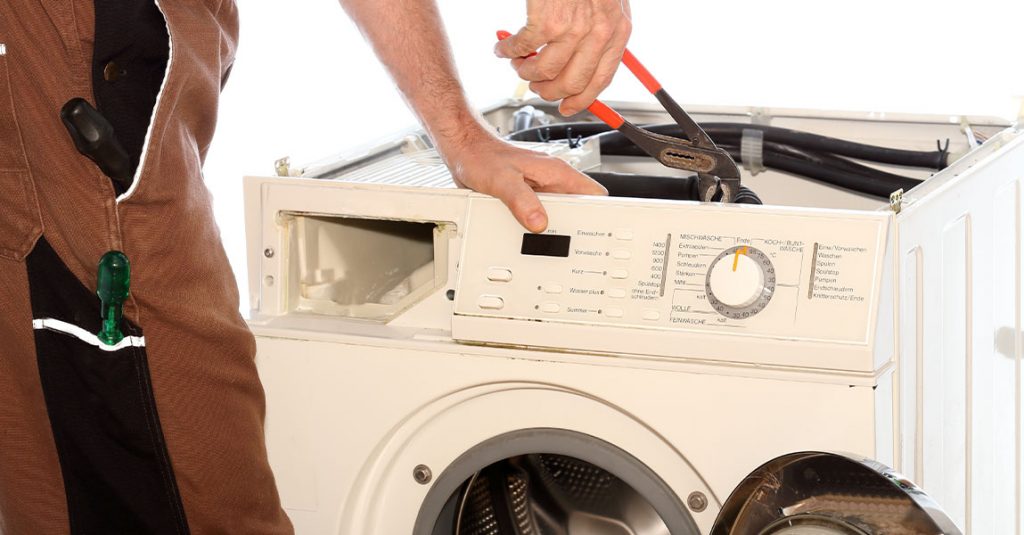
When your washer doesn’t fill with enough water, it’s frustrating. Clothes come out half-washed or not even wet. We know how quickly this throws off your routine, especially with a full laundry load waiting. There are a few common reasons this happens, and each one points to a specific fix. Let’s go through them clearly and step by step.
Water Inlet Valve Might Be Clogged or Faulty
The water inlet valve controls how much water flows into the washer. If it’s blocked, damaged, or failing, your washer might not get enough water even though the cycle runs.
We usually start by shutting off the water supply and removing the hoses. Behind the valve, there are tiny screens that catch dirt and minerals. If these screens get clogged, they slow water to a trickle. Cleaning them gently with a toothbrush or by rinsing under pressure can help. But if the valve doesn’t respond even with power reaching it, it may need to be replaced.
In cases like this, where the washer is running but the tub stays low on water, it often points back to the inlet valve. If you’re not sure how to test it, we handle this issue often during washer repair in Fort Saskatchewan.
Weak Water Pressure at the Supply Line
If the home’s water pressure is too low, your washer can’t fill properly even if the machine itself is working fine. We check this by disconnecting the hoses and running them into a bucket. If water flows slowly from the tap, it’s a supply issue, not a washer problem.
Sometimes the valves on the wall aren’t open fully or are blocked with buildup. Older plumbing or pressure regulators may also cause weak flow, especially if both hot and cold are affected.
Checking and cleaning the hoses is one thing, but if the pressure is still low at the source, the issue could be in the household plumbing. When that happens, it’s usually a good time to involve a plumber. Once water pressure is steady again, most washers return to normal operation.
For help narrowing this down, our appliance repair in Fort Saskatchewan team is ready with the tools to test both the washer and your supply lines.
Pressure Switch or Water Level Sensor Issues
The water level inside a washer is controlled by a pressure switch or water level sensor. If that part fails, it may tell the washer to stop filling too soon, even when there’s barely any water in the tub.
A small hose connects the tub to the sensor. If that hose gets clogged or loose, it can send false readings. We inspect it first, making sure it’s free of lint or residue and properly attached. Sometimes, blowing air through it clears out anything inside.
When the hose is fine but the washer still stops filling too early, we look at the switch itself. Some machines use analog sensors, while others use electronic boards to decide how much water is enough. A failed switch or board can cut off water flow too early.
Because these parts vary by model, it’s not always easy to pinpoint. If you’re unsure whether it’s a sensor or something else, you can contact JAY Appliances to schedule an inspection.
Kinks or Blockages in Water Hoses
A simple kink in a hose can lead to major fill problems. It doesn’t take much—just one bend behind the washer when it was pushed into place can slow down water flow enough to keep the tub from filling.
We carefully pull the washer forward and check both hoses. If they’re twisted, we straighten them out. If they’re old rubber hoses, they might have softened and collapsed over time. Replacing them with newer braided stainless steel hoses helps prevent future kinks.
Another problem happens at the fittings where hoses connect. Mineral deposits can form here and block water. We check for any signs of buildup and clean the fittings if needed. If the hose itself is clogged, we flush it through before reconnecting.
This issue is easy to overlook but makes a big difference. Any restriction in the line will prevent enough water from reaching your washer.
Timer or Control Board Malfunctions
If all the physical parts seem fine, but the washer still cuts off water too soon, we turn to the electronics. Washers either use a mechanical timer or an electronic control board to decide when to fill and when to stop.
A worn-out timer may not complete the full cycle, cutting off the water before it’s done. On the other hand, a faulty board might misread signals and stop filling early. We listen for clicks or pauses and watch how long the valves stay open.
Inconsistent behavior usually points to one of these components. If the washer fills for a second, stops, then starts again—or doesn’t fill at all—it may be reacting to bad input from the board or timer.
Fixing this takes precision. Boards need to be matched exactly to the model. If we suspect this is the issue, we recommend a professional diagnosis to avoid unnecessary replacements. During local appliance repair in Fort Saskatchewan visits, we test control systems thoroughly before making recommendations.
Eco Modes and Wash Settings That Limit Water
Not every case of low water fill is a fault. Some washers are designed to use less water, especially when cold wash or eco modes are selected. These machines often spray water in short bursts or fill only a few inches.
If clothes aren’t getting clean, we look at the settings being used. Some cycles, like “Quick Wash” or “Eco,” limit water to save energy. For larger loads, these modes don’t always provide enough for thorough cleaning.
Most washers have deep fill or bulky item options that override these restrictions. We recommend trying one of these if your washer seems too dry during normal cycles.
Also, when sensors misread load size, they may adjust water levels too low. A reset or recalibration of the washer can help if you suspect this is happening regularly.
This is often mistaken for a problem when it’s just a mismatch between the cycle selected and the laundry type. Knowing how to set it right makes a big difference.
FAQs
Why does my washer start but barely fills with water?
This usually means the inlet valve is restricted, the pressure is low, or a sensor has misread the water level.
Can I clean the inlet screens myself?
Yes. Shut off the water, remove the hoses, and gently rinse the screens. Just be careful not to damage them.
How do I know if my pressure switch is faulty?
If the washer stops filling too soon every time, even with settings that should allow more water, the switch may not be working.
What should I check first when the washer doesn’t fill?
Start with water pressure at the tap, then the hoses, and finally the inlet valve before moving to sensors or controls.
Is there a way to force more water into a load?
Using deep fill or bulky settings can override the default water-saving mode and allow more water into the tub.